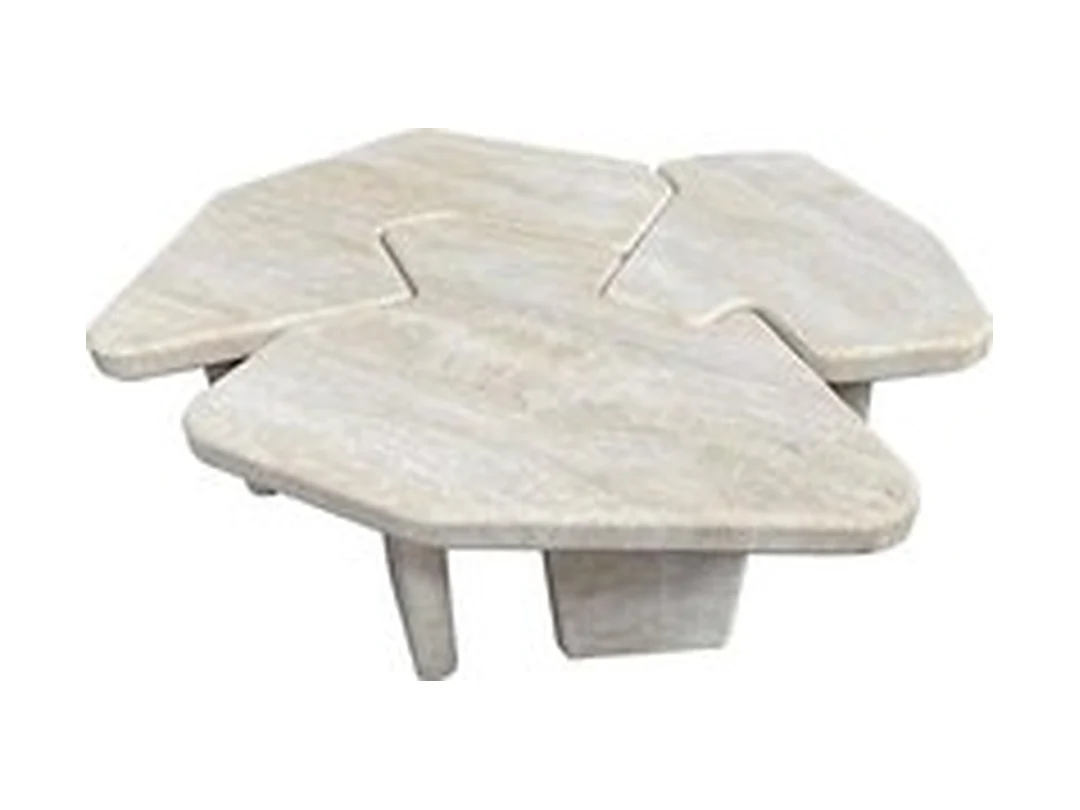
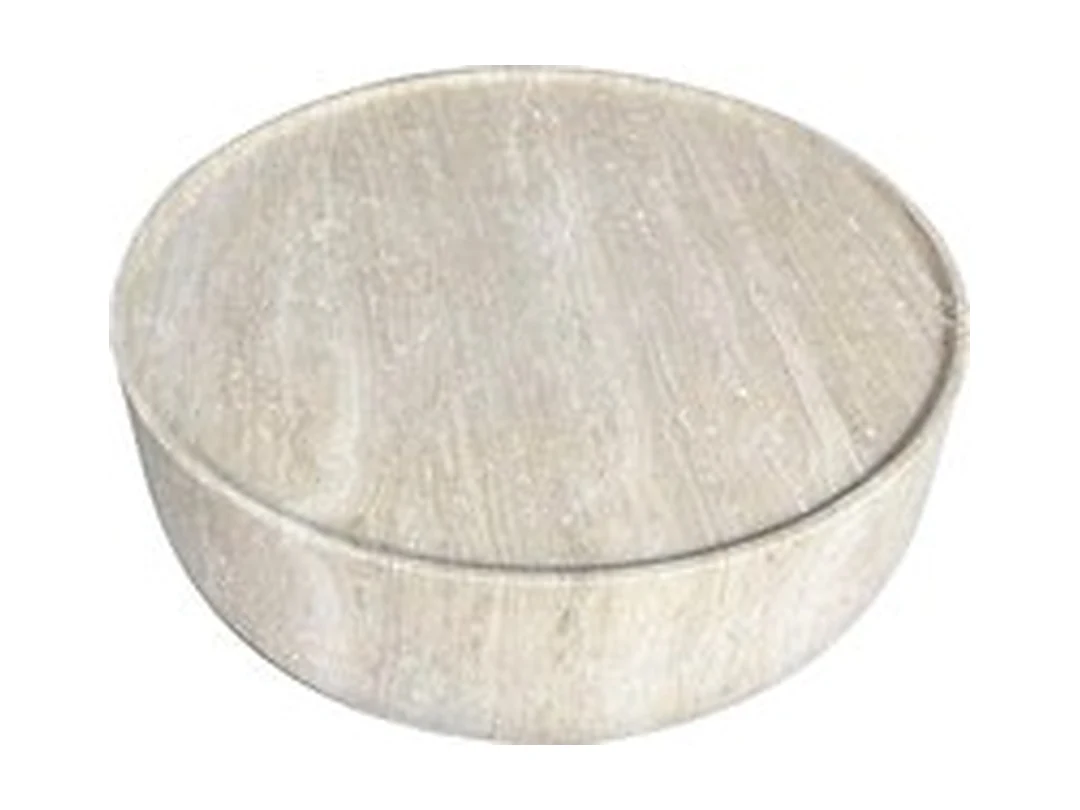
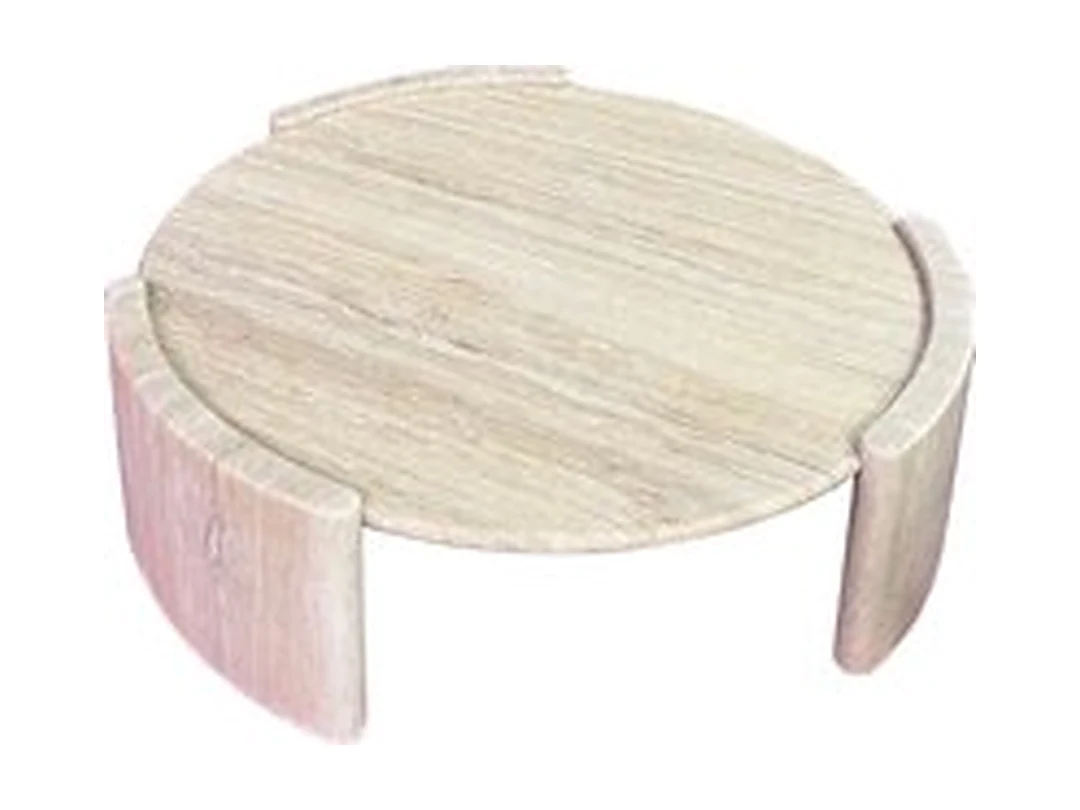
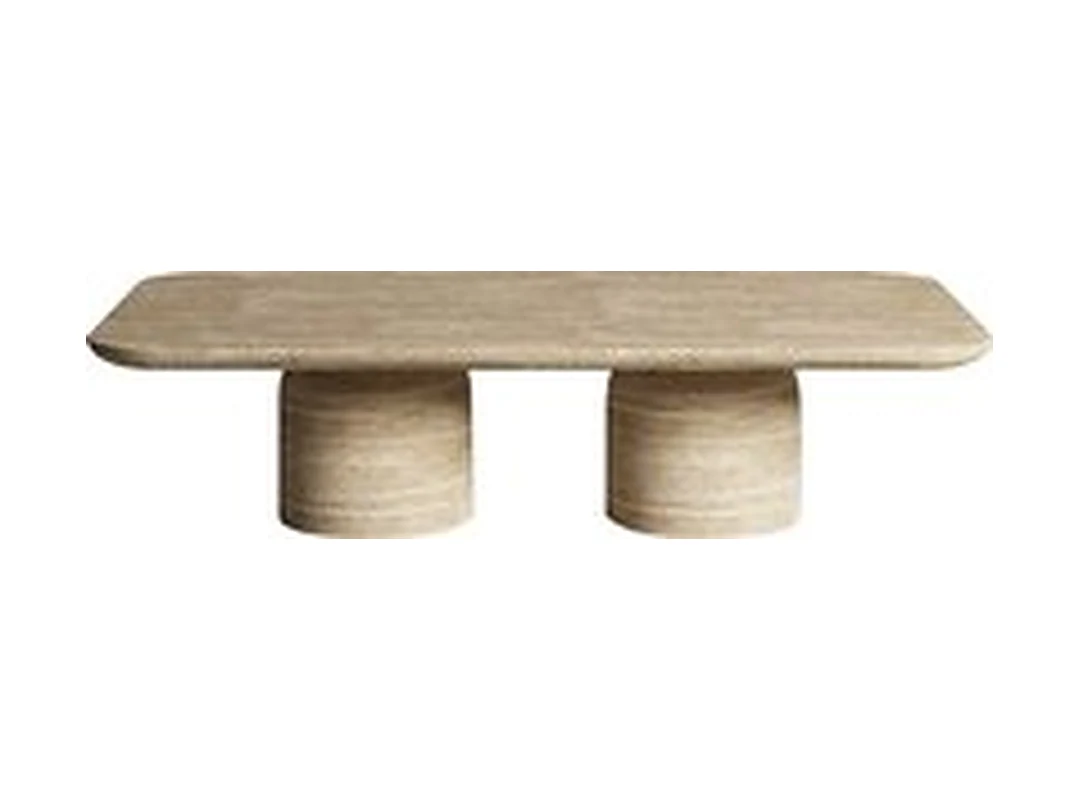
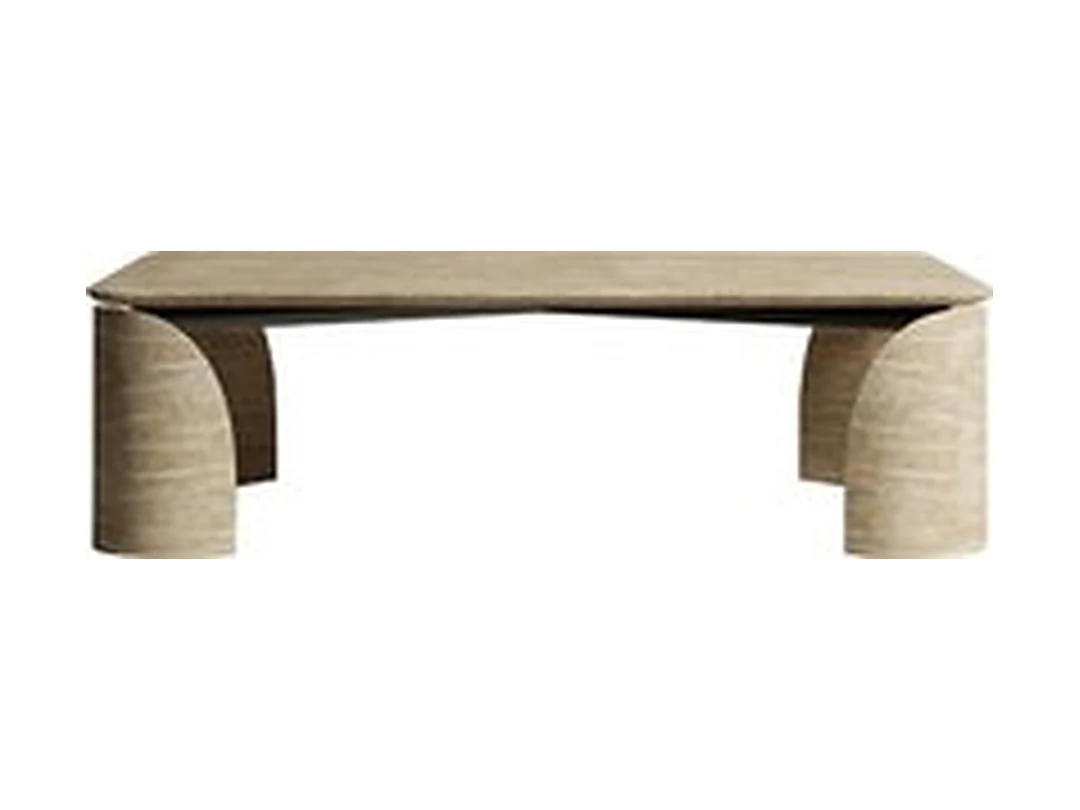
Can the dimensions of the Enna Travertine Coffee Table be changed?+
Yes, the dimensions shown are the design’s reference size, and adjusting them is the normal way this piece is ordered. Lengths, widths, diameters and heights can move within the structural logic of the form: state the size your space needs in the quotation form, or send a plan, and the production drawing comes back showing exactly what will be cut, with any engineering consequence made visible, a longer span may gain thickness or a support, a larger monolith reprices by block volume, and access implications are checked before you approve anything. You sign off the drawing, not a description, so the size that arrives is the size you agreed, dimensioned in millimetres rather than adjectives.
Can I have the Enna Travertine Coffee Table in a different stone than Beige Travertine?+
Usually, yes. Form and material are separate decisions in a factory-to-order model, so this design can be quoted in other stones from the collection, a warmer travertine, a darker marble, a green-veined stone, with two honest checks applied first: the alternative must suit the piece structurally (thin sections and fragile stones are assessed case by case), and it must suit the use you describe. Name the stone or just the colour direction in your enquiry; the quotation returns that exact combination, and where a pairing is inadvisable we say so with the reason rather than building it anyway. Samples of candidate stones can be arranged before you decide.
Will my piece match the photograph exactly?+
No, and with natural stone that is the correct answer, stated up front. Your piece will match the design, the finish quality and the stone type shown; the veining, tone and figure will be your block’s own, because Beige Travertine varies from block to block the way all quarried material does. Where the pattern matters, tops and visible faces especially, the material selected for your order is photographed for your confirmation before cutting, so the character of your piece is approved rather than assumed. Treat the product photography as the design’s introduction and the slab photographs as your piece’s truth.
How much does the Enna Travertine Coffee Table weigh?+
The honest number depends on the configuration you order, so it is stated on your quotation rather than guessed here: solid stone runs roughly 2.5–2.8 tonnes per cubic metre, and a size change of a few centimetres moves the figure meaningfully. What the weight means in practice is also addressed at quotation, how many people the placement needs, whether the route (doors, stairs, lifts) requires planning, and whether the floor deserves a thought, which for furniture-scale pieces it rarely does. If you need the figure early, for an engineer, a lift capacity, a boat, say so in the enquiry and it is confirmed with the first documents.
Does the floor need reinforcement for this piece?+
For furniture-scale pieces, almost never: the load spreads across the base or legs and lands in the territory of other heavy domestic objects, bookcases, pianos, filled wardrobes, which residential floors are built to carry. The categories that genuinely deserve a structural thought are stone baths and unusually massive monoliths on suspended or historic floors, and in those cases the quotation raises it explicitly with the piece’s real weight so your contractor or engineer can confirm rather than assume. Point loads on delicate finished floors are a different, smaller question, felt pads or a base plate distribute contact, and the delivery notes for this piece state what applies.
Is assembly required?+
It depends on the construction, and this piece’s delivery notes state it plainly. Monolithic designs arrive as one crated object: unpack, position, done. Multi-component designs, a top on a separate base, a bowl on a pedestal, ship as parts packed so they cannot touch in transit, with assembly deliberately simple: set the components together at the marked registration, using the fixing method stated in the included guidance. The only genuine requirement is lifting help proportionate to the component weights on your quotation. Placement-level delivery, where available for your destination, includes this assembly; otherwise the instructions travel in the crate for you or your contractor.
Is the surface sealed, and does it stay sealed?+
Pieces are finished ready for use, and our standing recommendation for working surfaces, tops that host drinks and meals, basins, trays, is a penetrating sealer maintained on a simple schedule: when water stops beading on the surface and starts darkening the stone, wipe on a fresh application; it is a minutes-long task, not a specialist visit. Sealing is honest maintenance rather than armour, it buys time to wipe spills; it does not make Beige Travertine immune to acids, which is what coasters and prompt wiping are for. The care notes packed with this piece state the regime for its specific stone and finish, and the Care & Maintenance page covers the chemistry in plain language.
Can this piece be used outdoors?+
It is specified for interior use, and outdoor placement is assessed rather than assumed, because the honest answer depends on your climate and position, not just the stone. Covered, mild-climate settings suit many dense stones well; open exposure adds the real risks: freeze–thaw cycles that stress porous stone, UV that shifts some colours, and weathering that walks polished finishes toward matte. Fixings, bases and drainage also change specification outdoors. If an exterior position is your intent, say so in the enquiry with the climate and cover situation; the reply will state plainly whether this piece and Beige Travertine suit it, and what changes, finish, sealing, stone substitution, would make it suitable.
How is the Enna Travertine Coffee Table packed for delivery?+
In its own timber export crate, engineered to the piece rather than pulled from a shelf. Surfaces are faced and protected, edges and corners, stone’s vulnerable geometry, are padded, and components are braced so nothing moves or meets in transit; multi-part pieces pack with separators, and fixings travel labelled in the same crate. Crates are built for real freight handling, with forklift access where the weight requires it, and your quotation notes the approximate crate dimensions and weight so you can check the delivery access at your end before dispatch. The piece is photographed at dry inspection before packing, so its condition entering the crate is on record.
What happens if access at my address is difficult?+
Then we plan for the difficulty before the piece exists, which is why the quotation form asks about lifts and stairs at the very start. Honest access answers let the right things happen early: carry crews sized and booked in advance, routes checked against the crate dimensions, and where a route is genuinely marginal, design responses on the drawing, splitting a base, making a top in two sections with a planned joint, while such changes are still cheap. Where access defeats to-the-door delivery entirely, kerbside handover with your own contractor completing the move is quoted as the fallback. What we refuse to do is discover the staircase on delivery day.
Can Geoscenic coordinate installation?+
Where installation is genuinely a factor, tick “installation coordination requested” in the quotation form and describe the site, the reply states exactly what can be arranged for your destination and what remains with your local trades, so nothing is silently assumed. The usual division of labour: placement-level delivery (where available) brings the piece to the room, unpacks, positions and completes simple assembly; connected work, plumbing a basin or bath, electrical for lighting, wall fixings, is your local professional’s scope for both practical and compliance reasons, supported by the production drawing that ships with the piece as the installer’s reference. Many pieces, of course, need no installation at all: they are placed, and the job is done.
What is the production lead time for this piece?+
It is confirmed on your quotation for your exact configuration, because a real date beats a generic promise: lead time moves with the stone’s block availability, the size and finishing involved, and the production schedule at order time. What is fixed is the sequence, production is booked when you approve the drawing and meet the deposit stage, the quotation states the expected production window from that point, and shipping time is quoted separately by destination and method. If a date governs your project, an installation window, a move-in, an opening, put it in the enquiry; we plan backwards from real dates routinely and will say honestly whether yours is achievable.